



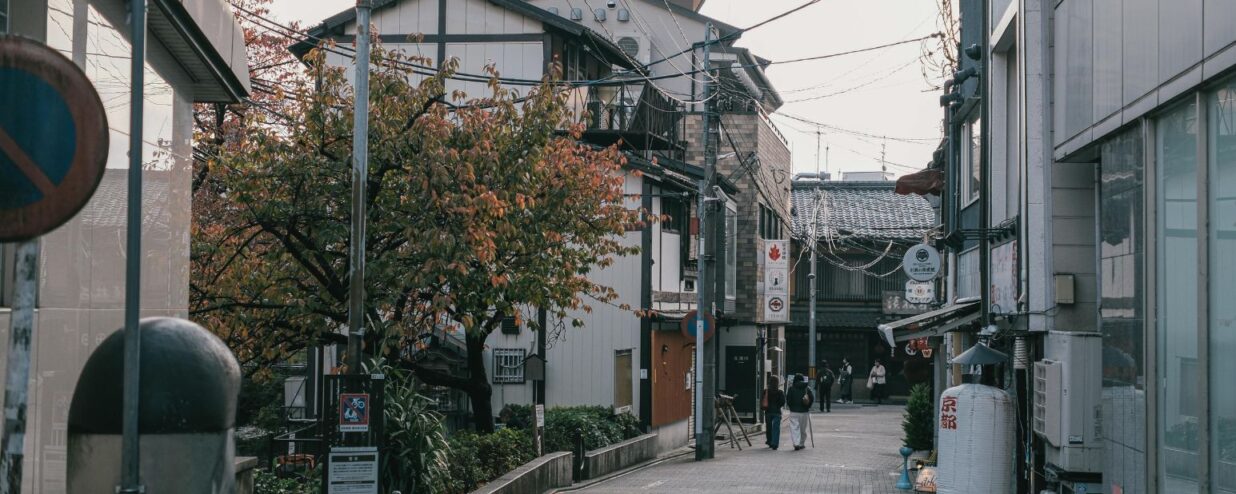


Just thirty minutes away from central Tokyo lies Kokubunji, a nice, quiet area with tree-lined streets, historic temple grounds, and cozy cafés, all without the tourist crowds. This niche part of Tokyo offers a quick escape from the hustle and bustle of the major wards such as Shibuya and Shinjuku. But just because it’s niche doesn’t mean that the area offers nothing to residents and tourists alike.
If you’re planning to live or visit this quaint area, we’ll show you where the best spots to visit are, where to eat, and why Kokubunji might be a great place to live. We’ll also show you how to get to Kokubunji, and when the best time is to visit. With that being said, let’s explore Kokubunji together while answering the question: Is Kokubunji a great place to visit?
Want to study Japanese with us?
How to Get to Kokubunji
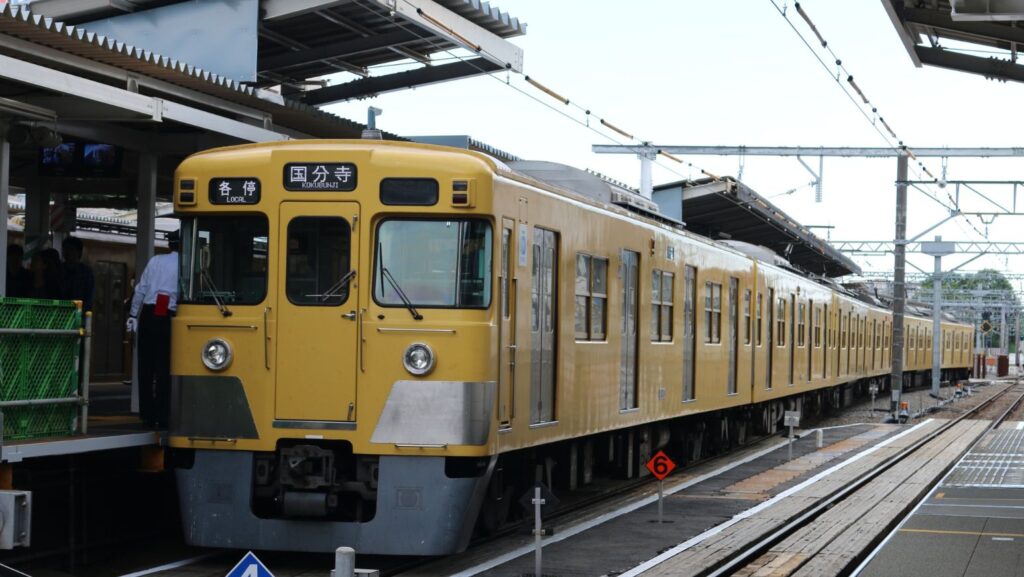
There are a few ways to get to Kokubunji. From Tokyo Station, take the JR Chuo Rapid Line all the way to Kokubunji Station, which should take about 40 minutes. From Shinjuku Station, it should take 20 minutes if you’re taking the Chuo-Rapid line.
You can also get to Kokubunji from the Saitama area as well. If you’re taking the Seibu lines, take the Kokubunji Line or Tamako Line to get to Kokubunji Station. If you’re taking the JR lines from Saitama, it’s possible to get to Kokubunji Station after transferring at Nishi-Kokubunji Station.
When Is The Best Time to Visit Kokubunji?
Kokubunji offers a lot of places to see the momiji (紅葉), which signifies the Japanese maple leaves that turn vibrant red. We recommend visiting Kokubunji in the autumn, specifically in November, where you’ll get great foliage spots without the tourists. Similar to the cherry blossoms in spring, the momiji has a dedicated forecast that predicts when the maple leaves turn red, so we recommend planning your trip to Tokyo early based on the forecast, especially if you plan to visit Kokubunji.
What to Do in Kokubunji
1. Visit the Musashi Kokubunji Temple
Established during the eighth century, this temple was founded under the orders of Emperor Shomu during the Tenpyo-Hoji period, when he decreed that provisional temples be built in each province. While the original temple no longer exists due to war fires in the Kamakura period, some parts were rebuilt in 1335, including the main Yakushi Hall and the Nio-Mon gate. Today, the temple is open to the public and a must-visit for anyone interested in learning about a significant part of Kokubunji’s history.
Every year on October 10, the temple allows visitors to see the Yakushi Nyorai, known as the Healing Buddha. This is a perfect opportunity to see the statue up close. Also, if you love cats, the temple sells cat-shaped charms as well!
2. Take a look at the remains of the original Musashi Kokubunji Temple
As mentioned earlier, the original Musashi Kokubunji Temple was destroyed by fire during the Kamakura period, and the main hall and gates were rebuilt. However, the nunnery and the seven-story pagoda that were part of the temple complex were not rebuilt, so all that remains are their ruins. Currently, the site is open to the public as an archaeological park.
You’ll be able to see parts of Japanese history that aren’t well known, and you can take in the natural surroundings of the temple ruins, especially in autumn.
3. Learn Japanese!
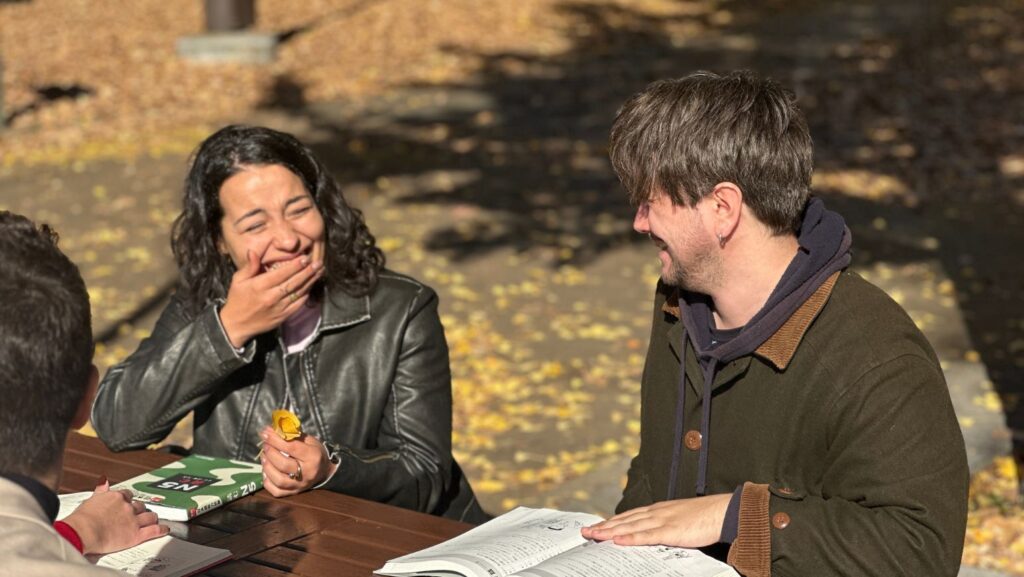
As an academic hub, Kokubunji is a perfect location to study Japanese, as there are many opportunities to practice your language skills since the area isn’t catered to tourists. There are plenty of opportunities to use your Japanese outside the classroom, whether you’re shopping or dining out. The place is also quiet, so you’ll be able to study Japanese without being interrupted by noise pollution. You can also head down to a nice study café after class and study as much as you want.
Some Japanese language schools, such as the Coto Japanese Institute, have modern campuses in Kokubunji that offer uninterrupted study, ample exposure to the language, and many opportunities to practice your Japanese skills. Head to the link below to start your application to study Japanese in Japan!
4. Take a stroll down Tonogayato Garden
If you’re looking for a quick nature getaway, visit the Tonogayato Garden for an experience away from the more popular nature spots such as Meiji Shrine! Opened to the public in 1979, this 21,000-square-meter garden features a bamboo forest, a pond with a natural spring, and many plants and trees both inside and outside the premises, including a Wisteria field.
There is a small teahouse that can also be used for tea ceremonies. Entry fees are around ¥150, so it is an affordable option for those who want to enjoy Kokubunji’s greenery.
5. Visit the Otaka-no-Michi Spring Park
Another place to enjoy the nature of Kokubunji is to go to the Otaka-no-Michi Spring Park. Otaka-no-Michi, roughly translated to “road of hawks,” was once used as a hunting ground for the Shogunate during the Tokugawa Shogunate. Located 15 minutes away from Kokubunji Station, this park features the Masugata Pond Springs, which, according to legend, are said to have magical healing powers (but we don’t recommend drinking the spring water). There is also the Musashi Kokubunji Temple Remains Museum, which exhibits artifacts excavated from the temple’s original spot. Entry fees to the park cost ¥100.
6. View the birds at Musashi Kokubunji Park
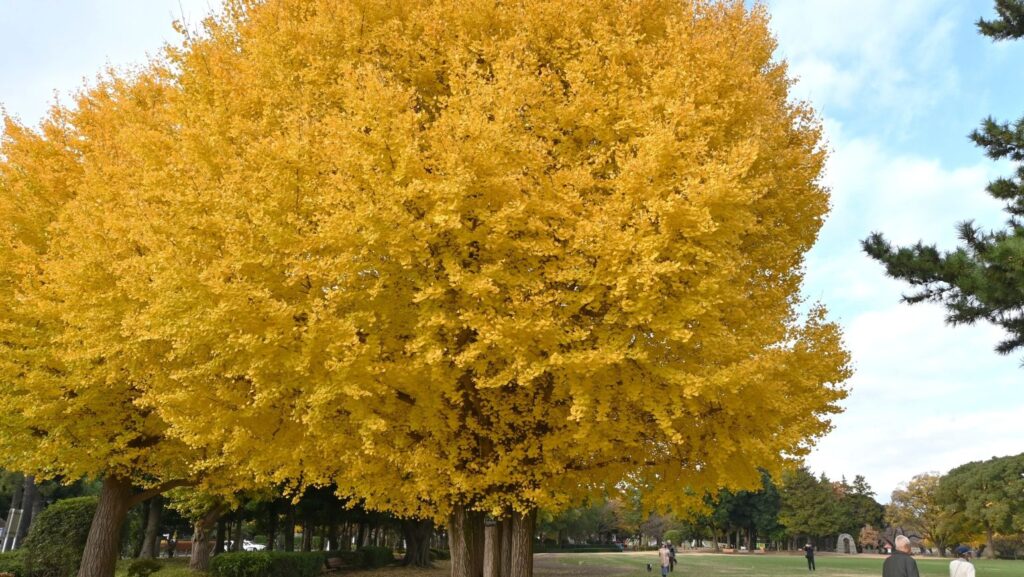
Musashi Kokubunji Park, located near the Musashi Kokubunji Temple Remains, is one of Tokyo’s more niche parks, but it’s still worth visiting. Opened in 2002, this park features the Musashi no Ike pond, where you can see kingfisher birds, as well as ducks waddling around in the water. During the autumn season, instead of fiery red maple leaves, the park is studded with the bright yellow of ginkgo trees, making it one of the best places to view them in Tokyo. In addition, the park also has cherry blossoms, or sakura (桜), that bloom in late March to early April, so if you want a quieter place for your next hanami (花見), go to this park.
7. Read a book at the Tokyo Metropolitan Tama Library
Next to Musashi Kokubunji Park is the Tokyo Metropolitan Tama Library, which is best known for its vast collection of magazines and children’s books, both Japanese and foreign. The magazine collection hosts around 6,000 magazine titles on display, ranging from the past year to the current year, as well as 8,700 first-edition magazines, with the earliest issue dating back to 1877! The library also hosts a café and group study room for those who want to relax or do more studying after classes.
8. Go shopping at Celeo Mall
This place is perfect for your inner shopaholic! Located close to Kokubunji Station, Celeo Mall has everything, from fashion stores and bookstores to modern restaurants and cafés. The mall features 10 floors, each with a variety of stores and cafés, with the ninth floor dedicated to restaurants. You can find a range of products for sale, from the latest fashion to electronics and books. When you’re done shopping, stop by any café for a well-needed break. The mall is also connected to the Kokubunji Marui mall.
What to Eat in Kokubunji
Just like any part of Tokyo, Kokubunji has no shortage of good eats. Maybe you want to grab a bite after work or classes? Here are some of our recommendations on where to eat:
1. Grain Coffee Roaster Kokubunji
A nice, cheap coffee shop chain offering a variety of dishes and drinks. Perfect for long study sessions after classes.
| Address | 4-12-1 Honcho, Kokubunji, Tokyo 185-0012 |
| Cuisine | Coffeeshop |
| Price Range | ¥1,000 |
| Opening hours | Weekdays: 08:00 ~ 20:30Weekends: 08:00 ~ 18:30 |
2. Lighthouse Tokyo
A restaurant located near Tonogayato Garden, serving mainly Dutch cuisine. They also sell a bunch of European draft and bottled beers, and they also have a happy hour!
| Address | Kanshou Kokubunji Green Heights, 2-15-6, Minamicho, Kokubunji, Tokyo 185-0021 |
| Cuisine | Dutch |
| Price Range | ¥1,000 ~ ¥2,000 |
| Opening hours | Tuesday to Thursday: 14:00 ~ 00:00Friday to Saturday: 14:00 ~ 01:00Sunday: 14:00 ~ 23:00 |
3. Konaya Kokubunji
This store is a part of an okonomiyaki chain. This restaurant allows you to make your own okonomiyaki.
| Address | Chakin Blg. 3F, 3–4-3, Honcho, Kokubunji, Tokyo 185-0012 |
| Cuisine | Okonomiyaki |
| Price Range | ¥2,000 ~ ¥3,000 |
| Opening hours | Weekdays: Lunch: 11:30 ~ 15:30 Dinner: 17:00 ~ 22:00 Weekends:11:30 ~ 22:00 |
4. Aozora Shokudo
Great if you’re looking for a place that serves cheap, yet delicious food. Aozora Shokudo serves mainly Japanese cuisine, but they also sell dishes like fried rice.
| Address | 2-16-19 Minamicho, Kokubunji, Tokyo 185-0021 |
| Cuisine | Shokudo, Chinese, Ramen |
| Price Range | ¥1,000 ~ ¥2,000 |
| Opening hours | 11:00 ~ 21:00 Closed on Tuesdays |
5. Mensouken Kurenai Kokubunji
This restaurant specializes in spicy ramen, and they even have an item that really pushes your spice tolerance to the limit. They also sell Miso Ramen if you’re not looking for anything spicy.
| Address | 2-2-15 Honcho, Kokubunji, Tokyo 185-0012 |
| Cuisine | Ramen |
| Price Range | ¥1,000 ~ ¥,2000 |
| Opening hours | 11:00 ~ 22:00 Closed on Mondays |
Is Kokubunji a Great Place to Live?
With direct access to Shinjuku, Kokubunji is easily connected to other city centers and to other parts of West Tokyo, including Mount Takao and Tachikawa. It’s also more quaint compared to other major parts of Tokyo, so if you’re the type of person who wants to enjoy the quieter side of Tokyo, or if you want to find more niche nature spots in Tokyo, then this area might be for you.
If you’re planning to live in Kokubunji, rent is also cheaper compared to suburbs located closer to central Tokyo, so you’ll be able to save a lot of money living there. In addition, the area feels more local, so you’ll easily get a feeling of what daily Japanese life is like. Because of this, not only will you get to practice your Japanese, but it’s also easier for you to get used to life in Japan.
Conclusion: Kokubunji is a great place to visit and to study Japanese.
Kokubunji is a perfect place for you to visit if you’re looking for a place that’s totally different from the hustle and bustle of Central Tokyo. With its niche nature spots and historic temples, this quaint area is sure to open your eyes to the city’s quieter side. In addition, if you’re planning to live and study in Kokubunji, the area’s localness will help you adjust to daily life in Japan more quickly.
Study Japanese in Kokubunji!
If you want to practice your Japanese while living in Tokyo, why not study with Coto Japanese Institute, a full-time Japanese language school? You’ll be able to learn Japanese with the best teachers, in modern, state-of-the-art facilities located in Kokubunji.
While the Institute offers short-term courses, we recommend taking the one-year, long-term courses to not only sustain your learning progress but also help you with career placement in Japan!
Ready to begin your Japanese learning journey, or need more information on Coto Japanese Institute?
FAQ
Is Kokubunji a suburb of Tokyo?
Technically, yes, as Kokubunji is located in the western parts of Tokyo, and is primarily a residential area. You can get a glimpse into daily Japanese life there.
What is Kokubunji known for?
Kokubunji is known for its historic temples and parks, such as the Musashi Kokubunji Temple and the Tonogayato Garden. It’s perfect if you want to get away from the hustle and bustle of Central Tokyo, and it’s also known for quiet momiji spots.
Is Kokubunji easy to get around in?
Yes, with easy access to Shinjuku Station, Kokubunji is well-connected to other major train stations, including Tokyo Station. You can also access Kokubunji from Saitama as well.