




When planning to study Japanese in Tokyo, many students immediately think of famous central districts like Shinjuku or Shibuya. While these areas are iconic, they represent only one side of what the Tokyo Metropolis has to offer. Western Tokyo, which is home to cities such as Kokubunji, Mitaka, Tachikawa, and Hachioji, is often overlooked, yet it’s one of the most underrated areas for attending a Japanese language school.
While Eastern Tokyo is the high-density “metropolis” of wards, Western Tokyo is composed of 30 unique municipalities. Here, rent and daily expenses are significantly lower than in central hubs like Minato or Meguro. It is also home to many major universities and a community-focused atmosphere. As more students search for the best Japanese language school in West Tokyo, this area has quickly become one of the smartest places to study.
To help you find the right fit, we’ve researched and compiled a list of the best Japanese language schools in West Tokyo. We rate them based on programs, student support, and student visa support. Here are our top recommendations.
Where is West Tokyo?
Western Tokyo, also known as the Tama Region, is the expansive portion of the area on the west side of Tokyo Metropolis. Unlike East Tokyo, which has 23 Special Wards, Western Tokyo consists of 30 “municipalities”: 26 cities, 3 towns, and 1 village.
Surprisingly, while the area covers approximately 1,160 square kilometers, which is nearly double the size of the eastern ward area, the region is roughly five times less dense than the city center.
The boundary between these two regions is marked by several key cities that border the eastern wards. On the western side of the line, you will find Mitaka, Chofu, Komae, and Nishi-Tokyo, while the eastern wards of Nerima, Suginami, and Setagaya sit directly adjacent to the west.
Despite its more suburban feel, the region is home to several major population hubs that often serve as commuter towns: Hachioji stands out as the largest city and a prominent university town, while Machida serves as a major transit and shopping destination. Other essential areas include Tachikawa, Kokubunji, Mitaka, and Musashino.
Getting From West to East Tokyo
Western Tokyo is served by the JR Chuo, Keio, and Odakyu lines, which connect the suburbs to central areas like Shinjuku and Shibuya in as little as 30 minutes.
While these lines offer direct access to the city’s western gateways, traveling towards further east, such as Minato or Meguro, typically requires a transfer. For example, if you are heading to Roppongi, you will usually switch to the Tokyo Metro or Toei Subway lines at Shinjuku or Shibuya. Many business districts in Tokyo are exclusively linked via the subway network.
One notable exception is the Odakyu Line, which offers a “through-service” onto the Tokyo Metro Chiyoda Line at Yoyogi-Uehara.
1. JR Chuo Line
The JR Chuo Line, for example, connects major West Tokyo cities like Hachioji, Tachikawa, Kokubunji, Mitaka, and connects you straight to Shinjuku and Tokyo Stations.
Because many of these routes also offer rapid express services, living in a vibrant city like Tachikawa or Hachioji often feels just as connected as living within the 23 wards.
2. Keio Line
The Keio Line is a private railway that offers a fantastic alternative to JR. It connects Keio-Hachioji, Takahatafudo, and Chofu directly to Shinjuku.
3. Odakyu Odawara Line
Running through the southern part of West Tokyo, the Odakyu Line connects cities like Machida and Tama-shi to Shinjuku. This line is famous for its “Romancecar” express trains.
Why Study Japanese in Western Tokyo?
1. Affordability
Choosing to study Japanese in West Tokyo gives you the “best of both worlds” experience. For many international students, the dream of living in Japan comes with the reality of a tight budget, which often leads people to look at other prefectures like Saitama to save money.
For example, the average monthly rent in Kokubunji generally ranges from ¥46,000 to ¥60,000 for studios. The same studio size in Shinjuku costs from ¥95,000 to ¥135,000. For groceries and everyday items, they can be slightly cheaper; while it might only be a few yen difference per item, those small savings really add up over a full month or year.
Read more: How much does it cost to study Japanese in Japan?
2. Great Access to Tokyo
By “Tokyo”, we meant central Tokyo. While cities like Osaka, Yokohama, and Fukuoka are becoming more popular among international students and expats, the reality is that the vast majority of “mega-companies” and global headquarters are still in Tokyo.
This makes life much easier when you begin your job hunt, a process known in Japan as shuushoku katsudou (就職活動), or simply shuukatsu for short.
3. You’re Not Losing on Culture
The great thing about living in areas like Kokubunji or Mitaka is that you aren’t losing out on the Japanese cultural experience. In fact, many find that living in these local neighborhoods allows for deeper immersion than the “tourist bubbles” of central Tokyo. You have easy access to the Okutama region, famous for its forests, crystal-clear rivers, Mt. Takao, and Showa Memorial Park in Tachikawa.
Best Japanese Language Schools in West Tokyo
1. Coto Japanese Institute
| Name | Coto Japanese Institute |
| Best For | Comprehensive career support and practical curriculum for long-term future in Japan |
| Intakes | April and October |
| Visa support | Yes |
| Location | Kokubunji-shi, Tokyo |
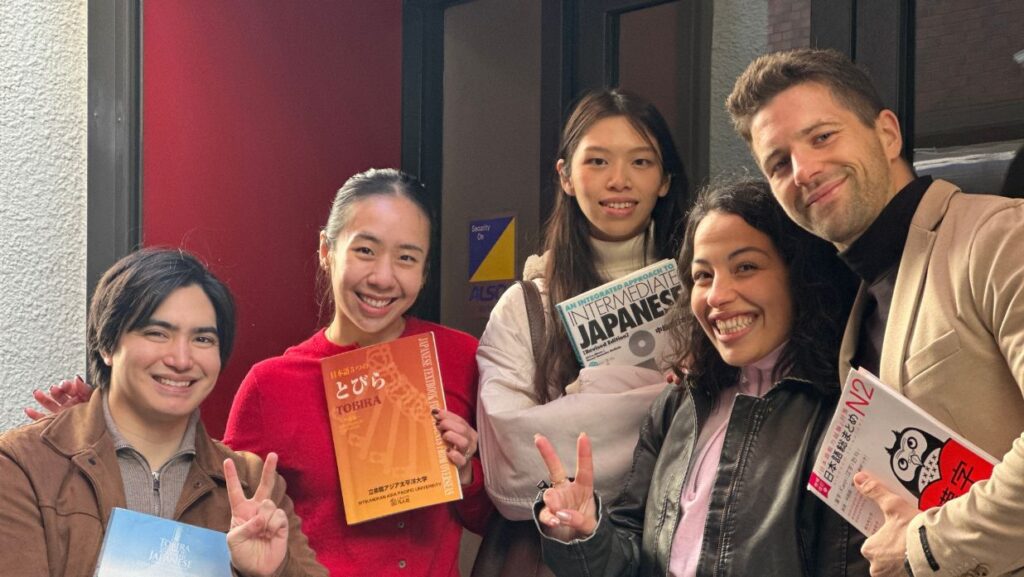
Coto Japanese Institute is a brand-new Japanese language school in West Tokyo, launched by the experienced team behind Coto Academy. Located in Kokubunji, the school offers a refreshing alternative to the traditional, exam-focused academic environment.
What sets Coto Japanese Institute apart is the practical, results-driven curriculum. While many schools primarily serve students preparing for vocational colleges or university entrance exams, the school specializes in career success: supporting students who want to find a job in Japan and build a meaningful, long-term career.
Why this specialized focus? Because language skills alone are not enough. While they help students prepare for and pass the JLPT and achieve their academic goals, the ultimate mission is to bridge the gap between Japanese study and professional success. Because of this, the school provides comprehensive career support, including one-on-one career counseling, resume and CV guidance, interview preparation, and job-hunting strategy workshops.
If you want to study at Coto Japanese Institute, click on the link below to head to the application form!
2. Tokyo International Exchange College
| Name | Coto Japanese Institute |
| Best For | Academic preparation for university or higher education |
| Intakes | April, July, October |
| Visa support | Yes |
| Location | Hachioji-shi, Tokyo |
Tokyo International Exchange College (TIEC for short) is located in Hachioji, which is the largest “green city” in West Tokyo, and sits near the border of Kanagawa is the longest-established Japanese language school in the West Tokyo area and is more known for its pre-college language program. This program is specifically designed for students who want to get into Japanese universities, vocational schools, or graduate programs.
The major draw of studying in Hachioji is the incredibly low cost of living. Because the area is a major university hub, rent is among the cheapest in the entire Tokyo Metropolis. You can find decent studio apartments for as little as ¥30,000 to ¥40,000, which is probably half (or even a third) of what you would pay for a similar space in central Tokyo.
One hiccup we saw was that TIEC often requires you to apply directly or through specific educational consultancies in your home country instead of an online portal. This means you’ll need to plan ahead and potentially seek out a local partner to assist with your enrollment.
3. Tokyo Hirata Japanese Language School
| School | Tokyo Hirata Japanese Language School |
| Best For | Academic preparation for university |
| Intakes | April, July, October, and January |
| Location | Fussa-shi, Tokyo |
Tokyo Hirata Japanese Language School in West Tokyo is located in Fussa and was established in 2003. Fussa itself is a unique city, as about one-third of the area is occupied by the Yokota Air Base. This gives you a mix of very local Japanese life alongside an international scene fueled by the American military presence, which means you’ll find plenty of foreign-friendly restaurants.
We recommend this Japanese language school in West Tokyo if you are looking to live more affordably while focusing on your college studies. The school focuses on college preparation and not really career, and you study Japanese thoroughly, starting from the basics. The program length varies depending on when you join, with the shortest at 1.5 years and the longest at 2 years. Students can also take specific courses to prepare for the JLPT.
One thing to keep in mind is that the student body isn’t as diverse as that of schools in the city center.
4. Nitto International Academy
| Feature | Details |
| Best For | University and Graduate School preparation |
| Intakes | April, July, October, and January |
| Location | Hachioji-shi, Tokyo |
Nitto International Academy is another strong option in Hachioji. Originally founded in Kanagawa in 2009, they opened their Hachioji campus in 2016 to serve the growing number of international students in West Tokyo. This school is primarily geared toward students who want to move on to higher education in Japan. They offer several long-term tracks ranging from 1 year and 3 months to a full 2 years. The student body is quite international, and mostly comes from Asian countries like China, Vietnam, Nepal, and Myanmar.
For accommodation, they have a student dormitory. They also help students find part-time jobs in the local area!
5. West Tokyo International College
| Feature | Details |
| Best For | Academic prep (EJU/N1) and early career guidance |
| Intakes | April, July, October |
| Location | Hachioji-shi, Tokyo |
West Tokyo International College, or WTIC for short, is also located in Hachioji. The school primarily offers college preparatory courses, with tracks that vary depending on your desired intensity. For instance, one track is highly intensive and focuses on EJU (Examination for Japanese University Admission) and achieving JLPT N1. There is also a track where students begin receiving dedicated career guidance from their second year onwards. The school has teachers who specialize in job hunting, business Japanese, and vocational skills.
Currently, most of their students come from countries such as Nepal, Vietnam, Myanmar, Mongolia, and Bangladesh.
Conclusion
As you can see, there is no shortage of great Japanese language schools in Western Tokyo. A great thing about studying in this area is that you can get the perfect mix of affordable living, quality lessons, and mountain views!
Why We Recommend Coto Japanese Institute
While there are several great schools in the area, we like to think Coto Japanese Institute in Kokubunji offers the most modern and goal-oriented experience for students who are serious about their future in Japan.
Most language schools focus heavily on getting 18-year-olds into Japanese universities. At Coto, we do things differently. We specifically built this campus for university graduates and professionals who want to focus on what really matters: career success and an overall great life in Japan.
Applications for the April and October intakes are currently open, so you can contact us to get started!
Want Other School Options? We Partner With Other Schools, Too!
While we would love to have you at our Kokubunji campus, we know that every student has different needs. Maybe you’re looking for a school in a different city, or perhaps you have a specific budget or academic goal that requires a different setting.
That’s exactly why we created Coto School Finder, a free service designed to help you navigate the overwhelming process of choosing a school and applying for a student visa.
As a language school ourselves, we’ve partnered with over 15 highly-rated schools across Japan to ensure you find the perfect fit. You can contact us for a free consultation here! You can learn more about Coto School Finder here.
FAQ
Is West Tokyo really that much cheaper than central Tokyo?
es, especially when it comes to rent. While a tiny studio in Shinjuku or Shibuya can easily cost you ¥100,000+, you can find similar or larger apartments in West Tokyo cities like Kokubunji or Hachioji for ¥40,000 to ¥60,000. Grocery prices are also slightly lower because the area has more large, discount supermarkets compared to the expensive “mini-marts” in the city center.
What are some great Japanese language schools in West Tokyo?
West Tokyo is home to several top-tier Japanese language schools, including Coto Japanese Institute in Kokubunji for career-focused professionals, and established academic hubs like Tokyo International Exchange College, West Tokyo International College (WTIC), Nitto International Academy in Hachioji, and Tokyo Hirata Japanese Language School in Fussa.
How long does it take to get to central Tokyo?
It’s faster than you might think! If you live near a major station like Kokubunji or Tachikawa, the JR Chuo Line Special Rapid service can get you to Shinjuku in about 20 to 30 minutes. Even from further out in Hachioji, you are only about 40 minutes away from the heart of the city.