




How to Prepare COE Documents
Check below for the document rules of the Immigration Services Agency of Japan, made for applicants in general. Read the first three sections carefully to prevent the mistakes that most often force applicants to resend papers to Japan.
Before You Begin
These guidelines are rules set by Coto Japanese Institute, but requirements are set by the Immigration Services Agency of Japan, and they are checked strictly.
Every requirement here applies in full
Some long-established schools are “designated schools” (適正校) whose applicants may submit fewer documents. Coto Japanese Institute is newly established and not yet a designated school, so all requirements below apply to all applicants without exception.
What Coto Japanese Institute supports
Coto Japanese Institute prepares the Japanese translations of your documents, binds and compiles the application, completes the Confirmation Sheet, and attaches your photo to the form. Please follow the instructions exactly.
Common Mistakes with Document Submissions
Many documents will need to be shipped internationally. Formatting errors or inaccuracies may require them to be resubmitted, causing delays.
Mistake 01
Printed on Letter size, not A4
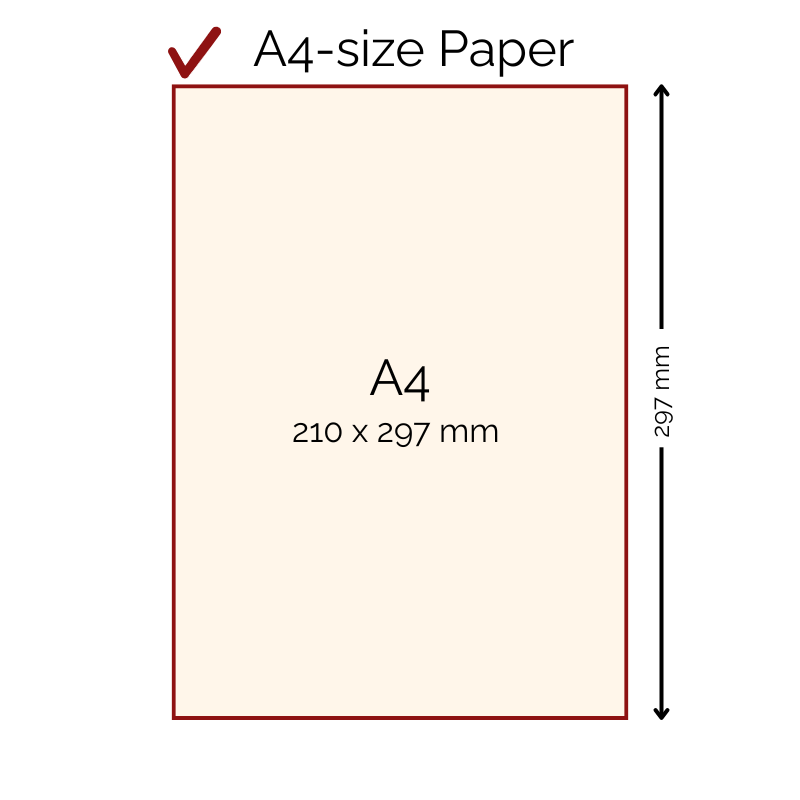
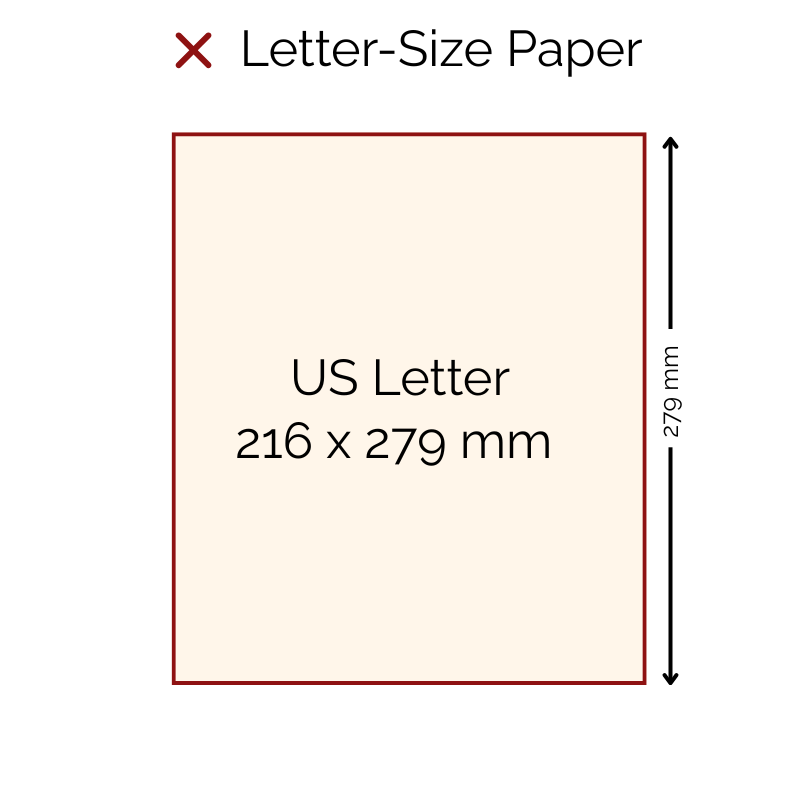
Letter (US/Canada) is not A4. Use A4 only — 210 × 297 mm.
Mistake 02
Printed on both sides of the paper
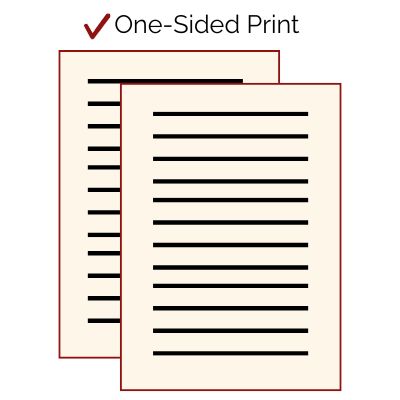
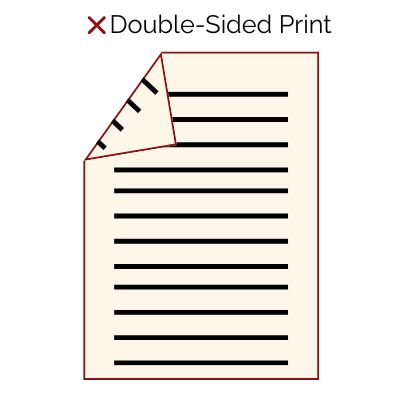
Two-sided pages are rejected. Print single-sided only.
Mistake 03
Sent a copy of a bank or tax document
Bank & tax papers must be originals with the bank’s seal or signature.
Mistake 04
Mailed the original of a one-time document
Birth certificate / diploma: send an A4 copy, keep the original.
Mistake 05
Photo was the wrong size
The photo must be exactly 3 cm wide × 4 cm tall.
Mistake 06
Photo was hand-cut and too small
Don’t trim by hand. Order a correctly-sized photo.
Mistake 07
Used a close-up or a blurry selfie
No selfies. Front-facing, sharp, plain background.
Final step
Run the pre-submission checklist
Check every item before you mail anything.
Formatting Rules for Document
Document requirements vary by application type. Some are submitted digitally, others by mail, and some must be originals rather than copies. To help you get it right, we’ve put together guidelines covering the most common mistakes applicants make, along with key dos and don’ts.
Rule A: Use A4-Sized Paper Only
Japan’s standard paper size is A4, not Letter. Because the two sizes are very similar, they’re often confused, especially if you’re in North America, where Letter is the default paper size. Documents submitted on any paper size other than A4 will be considered incorrectly formatted and must be resubmitted, which may delay processing.
- Set the size to A4 in your printer settings and your PDF/export settings.
- When asking a bank or office for a document, request it on A4 if possible.
- Buy A4 paper if you are printing at home.
- Don’t set your printer or PDF export to US Letter — even if it looks similar, it will be treated as incorrectly formatted.
- Don’t assume the bank or office will issue on A4 by default — always ask specifically.
- Don’t print at home on Letter-size paper and submit without checking the size first.

If a document is issued in a size other than A4 (for example, a small original or an oversized certificate), you will need to send the original as-issued plus an A4-sized copy.
Rule B: Print Single-Sided, Not Double-Sided
Every page must be printed on one side of the sheet only. Modern printers often default to double-sided (duplex) printing to save paper. If a document already exists printed on both sides, we require you to make a fresh single-sided copy.
Rule C: Make Sure to Identify if Copy or Original is Needed
Some documents must be sent as originals via mail, while other documents must be mailed as copies. This is the mistake that costs the most, and it goes wrong in both directions
Why this matters: Documents you submit are not returned under any circumstances. If you mail the only original copy of your birth certificate or diploma, you will not get it back, so refrain from sending the original. Likewise, if you submit a copy of a bank statement (which can be reissued) instead of the required original, your application may be rejected, and you will need to obtain and send the original from abroad, resulting in additional time and expense.
Can this document be re-issued easily, as many times as needed?
Send the Original
with the bank’s seal / issuer’s signature
- Bank balance certificate
- Bank transaction statement
- Certificate of employment
- Income / tax certificates
A photocopy of these is not accepted.
Send an A4 Copy
keep the original — never mail it
- Birth certificate
- Diploma / graduation certificate
- Family register
- Anything issued only once
Submitted papers are never returned.
How to make an acceptable copy
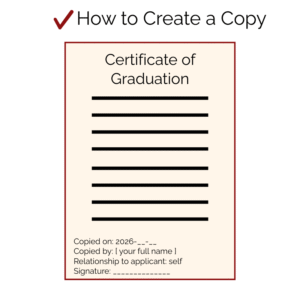
When you send a copy, it must be a direct, first-generation copy. The copy must be single-sided, printed on A4 paper, and include a short handwritten note in the margin with a signature and date of copy. Be sure to copy every relevant page, including the cover of booklet-style diplomas.
Your Photo
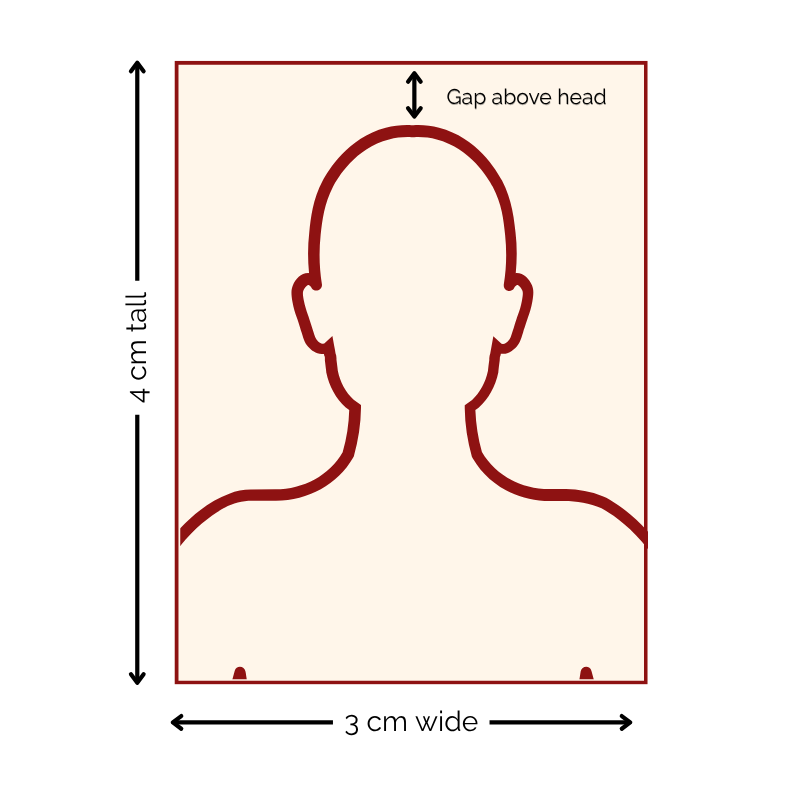
Make sure you follow the guidelines for sending passport-style photos, including the size, background color, and outfit. The photo is small, and the rules are exact. The safest option is to order a Japanese-visa-size photo from a photo studio or a photo booth and ask specifically for 3 cm × 4 cm. Your photo will be used for various forms and applications, so please provide 8 photos.
Please write your full name lightly on the back of the printed photo and send it with your documents. Coto Japanese Institute attaches the photo to the application form, so you do not need to glue or cut it.
Your photos must be:
- Centered on the head, with a little space above it.
- 3 cm × 4 cm
- Taken within the last 3 months
- Front-facing, whole face visible, neutral expression
- On a plain, light, shadow-free background
- Sharp and in focus, good lighting, no hat
Common Photo Mistakes

Blurry selfie ✕

Blurry selfie ✕

Hat / dark background ✕

Hand-cut / too small ✕
Full Document Guidance
The complete official guidance, restated in plain English. Original required means a photocopy is not accepted. Your action marks steps you must do. Items in teal boxes are handled by the school.
Documents in general
| Guideline | Person in Charge | Your Action |
|---|---|---|
| Submitted documents are never returned | Applicant | Immigration keeps everything you submit permanently. Before applying, confirm each document can be re-issued — only submit originals you’re able to get again. |
| Binding & compilation | School | Coto Japanese Institute will handle binding and compiling all submitted documents. |
| Validity period of documents | Applicant | Documents must be issued no more than 3 months before the application is submitted to Immigration. If, for unavoidable reasons, a document is older, it must still be within 6 months, and you must include a free-format written explanation of the circumstances. Depending on the explanation, the document may not be accepted as evidence; the final decision rests with Immigration. |
| Japanese translations | School | Coto Japanese Institute will prepare full translations of any foreign-language documents (including English), covering all wording (e.g., full bank statement text, not just figures). |
| Issuer details on certificates | Applicant | Each certificate should show: the issuer’s title and name; the issuing institution’s location and contact details (phone, fax, e-mail); and, where possible, the issuer’s signature (a seal may replace a signature). |
| Documents not in A4 single-sided form | Applicant | Smaller than A4: submit as-is (don’t mount on backing paper) + a single-sided A4 copy enlarged to A4. Larger than A4: submit valley-folded to A4 width + a single-sided A4 copy reduced to A4. A4 but double-sided: submit the original + a single-sided A4 copy. |
| When a copy may be submitted | Applicant | Copies are only allowed for non-reissuable documents (e.g., family register, diploma). Reissuable documents (e.g., bank balance certificate) must be originals unless stated otherwise. If copying: (1) must be a direct first-generation copy, (2) single-sided, (3) fit on A4, (4) write in the margin: date copied, copier’s name, and their relationship to the applicant (e.g., “Copied on [date] / Copied by [name] / relationship: self”). |
Notes on Each Document
1. Confirmation Sheet (Handled by school)
This sheet is mandatory. The school completes and submits it, so no action is needed from the applicant.
2. Certificate of graduation from your last school
- For a booklet-type diploma, copy every relevant part, including the cover.
- Add the margin note (date copied · name · relationship).
- Bring the original diploma on the submission date as immigration verifies it in person.
- University graduates (including 大専 junior colleges): submit, if possible, the original authentication report from CHSI or CDGDC. If this authentication report is submitted, the diploma itself is not required.
- Senior-high graduates who sat the Gaokao (高考): submit the original CDGDC authentication report.
- A printout of the authentication body’s result page is accepted as the original report.
- If no authentication report is submitted and the school verified authenticity itself, submit the verification circumstances and supporting materials.
3. Proof of Japanese-language ability (Original required)
Submit the original transcript or score certificate showing A1 level or above on the Reference Framework for Japanese Language Education. A screen printout from a test website does not count as a certificate. For the tests marked below, submit the certificate stamped “for submission to the Immigration Services Agency.”
If you graduated from a foreign university/college and submit the diploma, language proof is generally not required, but may still be requested during examination.
- JLPT — N5 or above
- BJT Business Japanese — 300+
- J.TEST — Level F+, or FG-level 250+
- J.NAT-TEST — Level 5 or above
- STBJ — 350+
- TOPJ — Elementary A or above
- J-cert — Elementary or above
- JLCT — JCT5 or above
- PJC Bridge — C− or above
- JPT — 315+
- JPT Elementary — 68+
- Japanese Online Test (JT) — JT5 or above
- Surugadai Japanese Language Ability Evaluation Test — 300+
If you passed a test but cannot get the certificate in time, submit a copy of the admission ticket on the submission date and the certificate by the additional-documents deadline. Late materials may not be examined. Where ability is confirmed by school interview instead, this is recorded on the Confirmation Sheet by the school.
4. Statement of expense support (Original required)
Your financial supporter must show they can cover all costs after you arrive (tuition and living expenses), stating the amount and how funds will be sent, and must sign the statement in person. The Letter of Financial Support must be completed using our designated format; otherwise, required information may be missing, and the document cannot be accepted.
- Supporter other than a parent (e.g. a relative): explain ① why this person, not the parents, will cover your costs, and ② why the parents cannot.
- Loan-type scholarship covering living costs: follow the Immigration Services Agency guidance for loan-type scholarships and submit the documents in Reference Material 4, Attachment 4. Five newspaper scholarship societies (Asahi, Sankei, Nikkei, Mainichi, Yomiuri) are exempt, but you still submit a statement, signed by you, confirming you understand the loan terms.
- Grant-type (non-repayable) scholarship: submit the documents in Reference Material 4, Attachment 4. For loan or grant scholarships, also submit a 2-year list of recipients (school name, payment start date, identity particulars, residence-card number).
5. Proof of the relationship between supporter and applicant (Original may be required)
Submit a document issued or authenticated by a public authority (e.g., a birth certificate or notarized certificate of relationship) proving the family relationship. An affidavit alone is not enough.
- Family registers: copy the page(s) showing the household address and every member’s particulars and occupations.
- Extended kinship: chain the relationship with documents. Example: supporter is your mother’s elder sister (your aunt): ① proof of the mother–child link, and ② proof of the sisterhood between your mother and the supporter.
- In some countries, notarized documents for overseas use include an English translation. When applying, specify it is for overseas use.
6. Certificate of bank balance (Original required)
Must be issued in the financial supporter’s name. The original issued by the bank must be submitted without exception. A photocopy is not accepted. We highly advise getting it issued as close to the submission date as possible.
- Minimum proof of funds: For the bank balance certificate, what is important is that there is JPY 3,000,000 in readily available cash funds. If the amount is insufficient, the document cannot be accepted. Many applicants mistakenly submit a transaction statement showing the last balance of an account, even though that is not a bank balance certificate
7. How the funds were built up over the past year (Original may be required)
Show how the balance was accumulated over the year, normally with a copy of the savings passbook or a bank transaction statement for the past 12 months, ending on the balance-certificate date.
For the proof of the process of funds formation for the past year, applicants must submit 12 months of transaction records from the same bank account as the balance certificate, and the records must match the date and amount shown on the balance certificate.
When submitting 12 months of transaction records as proof of the process of funds formation, if there are withdrawals or deposits totaling several million yen during that period, applicants may be required to submit an additional written explanation describing where the money came from and why it was transferred (e.g., investment profits, a large gift from family, etc.).
- Name, bank name, account number and bank seal must be readable.
- Copy every page, including cover and blank pages, each fitting on A4.
- The anti-copy security background must be visible.
- Dates, amounts and balances must be clearly legible.
- Explain any unusual deposits/withdrawals in a separate signed, dated note.
- Submit the original, without exception.
- If not A4, add a single-sided A4 copy.
- Never write or mark on the original.
Fixed-term deposits & exceptional cases
Fixed-term (time) deposit: besides the deposit certificate, prove the source of the money placed into it (e.g. a passbook copy of the account it came from). Other materials (exceptional only): first submit a public-authority-certified document on the supporter’s income, then materials showing the specific accumulation process (e.g. produce price records, sales slips, receipts). If entries are insufficient, add a free-format explanation plus objective supporting materials.
8. Proof of the supporter’s occupation (Original may be required)
Documents proving the financial supporter’s occupation must be official documents. They cannot be self-written statements or unofficial materials (such as an email from an employer).
- Company employee: original certificate of current employment from the employer or a public authority.
- Business owner: a public-authority document showing they run the business (e.g. business permit or registration certificate).
- Company officer/director: a copy of the commercial register (登記簿謄本). If the officer’s name is not in the register, submit the employment certificate from ①.
- Other occupation (e.g. individual farmer): a public-authority document proving the occupation.
9. Proof of the supporter’s income over the past year (Original required)
Because income and income tax are linked, submit a certificate issued by the public authority responsible for income tax, covering the past year, that records both (1) the income/earnings amount, and (2) the income tax assessed and the tax actually paid. A payment receipt copy is not acceptable.
If the public authority cannot issue one, submit free-format explanatory materials from a body able to officially certify the figures, plus a written reason why the authority cannot issue the certificate.
Show both gross income and net income after taxes/dues.
If the income-tax certificate already shows the tax amount, a separate tax-payment certificate is not needed.
If the supporter’s occupation is agriculture (incl. forestry/fisheries/livestock)
Explanatory documents on ① farming scale (land/building/livestock ownership records + latest property-tax certificate), ② number of workers (family vs employees), ③ production equipment (machinery, trucks, barns + related tax certificates), ④ main buyers and sales channels, ⑤ past-year income and expenditure itemized, and ⑥ monthly sales over the past year help clarify income.
10. If the supporter is a relative living in Japan
Submit: ① the statement of expense support; ② a certificate of residence (Juminhyo) for all household members without the My Number; ③ the residential-tax income & tax-payment certificates for the most recent year (include all deductions and dependents; if tax-exempt, the tax-payment certificate is not needed); ④ proof of occupation; ⑤ a balance certificate and a 1-year transaction statement (passbook copy).
11. Support structure if an applicant under 18 lives alone
“Alone” means genuinely living by oneself (a dormitory with a supervisor who assists daily life does not count). Submit a document, confirmed by the school, explaining who provides day-to-day support and how. Further materials proving the living situation may be requested.
12. Written statements of reasons (Original required)
Submit a detailed free-format statement if any apply: ① a past COE non-issuance or status-change refusal; ② a past withdrawal of a COE/status-change application; ③ a returned COE or non-entry after issuance. Explain the facts and show the reason has been resolved, with supporting evidence. The statement must be written by the applicant in person, dated, and signed (a seal may replace a signature).
Other Notes
Recruitment materials are kept by the school for at least 3 years. No action from you. The application is bound in this order (the school does the binding; each translation follows its original):
- Application form
- Document list + Japanese-ability Confirmation Sheet
- Copy of passport
- Graduation certificate
- Japanese-ability materials
- Statement of expense support
- Supporter–applicant relationship proof
- Bank balance certificate
- Fund-accumulation materials
- Supporter’s occupation proof
- Supporter’s income proof
- Scholarship documents
- Under-18 support materials
- Statements of reasons + evidence
- Other voluntary materials
- Certificate of non-onset of tuberculosis
Final Check Before Submitting All Documents
It is always cheaper to ask before you mail than to re-send from abroad. If any document is unclear, contact Coto Japanese Institute before preparing it — a two-minute question can save weeks and international shipping costs.
Every page is A4 size
210 × 297 mm, not Letter. Check printer and PDF export settings.
Every page is single-sided
Nothing printed on the back of any sheet.
Bank & tax documents are originals
Balance certificates, transaction statements, and income or tax certificates must include the bank’s seal or the issuer’s signature. Do not submit photocopies.
One-time documents are A4 copies, not originals
Birth certificates, diplomas, and family registers should be copied onto A4 paper, annotated in the margin, and the originals kept safely at home.
Each copy includes the required margin note
Include the date copied, who made the copy, their relationship to the applicant, and their signature.
All documents were issued within the last 3 months
If a document is older than 3 months, it must be within 6 months and accompanied by a written explanation.
Photo is 3 cm × 4 cm
Recent, front-facing, sharp, with a plain background. No selfies, hats, or hand-trimmed photos. Write your name on the back. Provide 8 photos.
Keep your original diploma
Bring the original with you on your submission date so Immigration can verify it in person.